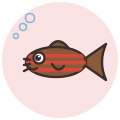
Not furry, but we like them anyway.
Chinese Hi-fin Banded Shark
Myxocyprinus asiaticus
Also called Chinese sucker, Chinese sailfin sucker, Chinese high-fin banded shark, Wimple carp, Freshwater batfish
From The Yangtze River basin of China, including tributaries such as the Yalong and Jialing rivers.12
At a glance the quick version
Looks how to spot one
Scaled sucker with tall dorsal fin
Young fish are deep-bodied with a tall triangular dorsal fin and three dark bands across a brown body. As they grow past about 30 cm the bands fade and the body becomes longer and plainer. It has thick, fleshy lips and no barbels.123
Personality what they are like
A peaceful, non-aggressive fish that lives in groups in the wild and spends its time sifting the bottom for food.3
Daily activity how busy a day looks
A river fish that migrates to fast, shallow headwaters to spawn, so it needs a lot of swimming room as it grows.23
Grooming and care the hands-on bits
Juveniles are sold small, but they grow roughly an inch a year into very large fish, so adults suit only large ponds (often with koi) or public aquaria. Check local laws before buying.23
Home where they are happiest
Cool to moderate water; sources give about 15 to 28 °C (FishBase) with Seriously Fish recommending 15.5 to 21 °C, pH 6.0 to 8.0, hardness 2 to 20 dGH.13
Food basics what goes in the bowl
Bottom-feeding omnivore eating insects, crustaceans, molluscs, worms and plant matter. In captivity offer sinking pellets with plant content plus small live or frozen foods.13
Company who they like around
Naturally found in groups and can share space with other large river fish.3
The story where it all began
This sucker is the only member of its genus, which is itself the only genus in its subfamily. It is farmed in China for food and bred in hatcheries for conservation, while its banded juveniles reached the aquarium trade as bottom cleaners.2
Fun facts for the dinner table
- 1
It has been called an 'ugly duckling in reverse' because its striking juvenile bands and tall fin fade as it grows up.2
- 2
Despite the name, it is not related to sharks at all; it is a sucker.2
- 3
It is the only species in its genus, which in turn is the only genus in its subfamily.2
- 4
Breeding males turn red on the flanks while females take on a dark purple shade.1
Recognised by the official bits
- IUCN Red List
- Assessed as Vulnerable (November 2022).1
- China
- A second-class nationally protected species in China, where it is also farmed for food and bred in hatcheries for conservation.2
- Legal note
- Illegal to import or keep privately in some countries, including the UK.3
The care rhythm Furry Diary remembers it for you
A typical home-care rhythm for a Chinese Hi-fin Banded Shark. It is our own starting plan, not a vet's advice, and you can change every line in the app.
- Feedingevery day
- Water changeAbout 25 to 30% of the waterevery week
- Water testevery week
- Glass cleanevery week
- Filter rinseevery month
You might also like
 Koi
Koi Sterlet
Like what we are building? Buy us a coffee.
The breed atlas is free for everyone, with a source on every fact, and it will never show ads. If it helped you, a small tip keeps the research going. Any amount is lovely, and no is a perfectly fine answer too.
Where this comes from
Every breed page shows where each fact comes from. If we got something wrong, sorry, we are pet people, not a science magazine. Tell us at support@furrydiary.app and we will fix it.
- FishBase: Myxocyprinus asiaticus fishbase.seused for range, size, weight, temperature, IUCN, breeding colours, body features
- Wikipedia: Chinese high fin banded shark en.wikipedia.orgused for names, size, weight, lifespan, colour change, growth, protection, history
- Seriously Fish: Myxocyprinus asiaticus seriouslyfish.comused for size, water parameters, diet, behaviour, keeping and legal notes
Checked 2026-09-30. Text is written in our own words from these sources.