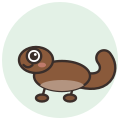
Scaly friends count too.
African Fat-tailed Gecko
Hemitheconyx caudicinctus
Also called Fat-tail gecko, Westafrikanischer Krallengecko (German)
From West Africa, from Senegal east to Nigeria and northern Cameroon. Lives in dry Sahel and in wet or dry savannah, sheltering in dark humid spots such as termite mounds, burrows and under rocks or logs.123
At a glance the quick version
Looks how to spot one
Ground-dwelling eyelid gecko with a plump fat-storing tail
A sturdy, soft-skinned gecko that lives on the ground rather than on walls. Its eyes have movable lids and vertical pupils, and its toes lack the sticky pads of climbing geckos. The thick tail works as a pantry, holding fat that keeps the animal going between meals. A tail that has been dropped grows back smoother and rounder than the original ringed one.13
Personality what they are like
A gentle, unhurried gecko that usually accepts calm handling once settled. It is active at night and spends the day tucked away in a hide. Keepers are advised to give a new gecko about two weeks to settle, then start with short sessions of around five minutes.31
Daily activity how busy a day looks
Strictly nocturnal; explores and hunts after dark. Needs floor space to roam rather than height, since it cannot climb smooth vertical surfaces.13
Grooming and care the hands-on bits
Provide a humid hide at all times to help with shedding and hydration. Never grab the tail, as it can detach. A seasonal cooler period from about November to March is recommended in ReptiFiles' guide.3
Home where they are happiest
A wide, terrestrial enclosure of at least about 91 x 46 x 46 cm (36 x 18 x 18 in), larger preferred. Warm-season targets: warm hide 32-34 C (90-94 F), cool side and nights 22-25 C (72-77 F), humidity 70-80% by day and near 100% at night. Around 10 cm of soil and sand substrate. UVB is optional but a low-strength UVB lamp and a 12-hour day cycle are suggested.3
Food basics what goes in the bowl
Insect eater. Offer crickets, roaches, mealworms and silkworms dusted with calcium. Juveniles eat daily, young adults every 2-3 days and adults roughly every 5 days.31
Company who they like around
Best kept alone. Pairs can work in a large enclosure, but males in particular do not share space well.3
The story where it all began
French zoologist Auguste Duméril described the species in 1851, with Senegal as the type locality. Its name refers to the banded, girdled look of the tail. Long overshadowed by its cousin the leopard gecko, it has steadily gained a following among keepers.21
Fun facts for the dinner table
Recognised by the official bits
- The Reptile Database
- Valid species Hemitheconyx caudicinctus (Duméril, 1851), family Eublepharidae (eyelid geckos)2
- IUCN Red List
- Least Concern1
The care rhythm Furry Diary remembers it for you
A typical home-care rhythm for a African Fat-tailed Gecko. It is our own starting plan, not a vet's advice, and you can change every line in the app.
- Fresh waterevery day
- Temperature checkCheck the warm and cool endsevery day
- Spot cleanevery day
- FeedingHow often depends on species and agevaries
- SupplementsCalcium and vitamin dusting as your vet recommendsas your vet recommends
- UVB bulb changeMany UVB bulbs fade before they stop glowing, follow the maker's adviceevery 6 months
- Weigh inevery month
- Full cleanevery month
- Vet check-upFind a vet who sees exotic petsevery year
You might also like
 Leopard Gecko
 Crested Gecko
 Gargoyle Gecko
Like what we are building? Buy us a coffee.
The breed atlas is free for everyone, with a source on every fact, and it will never show ads. If it helped you, a small tip keeps the research going. Any amount is lovely, and no is a perfectly fine answer too.
Where this comes from
Every breed page shows where each fact comes from. If we got something wrong, sorry, we are pet people, not a science magazine. Tell us at support@furrydiary.app and we will fix it.
- African fat-tailed gecko - Wikipedia en.wikipedia.orgused for origin, size, lifespan, body, colours, behaviour, IUCN, fun facts
- Hemitheconyx caudicinctus - The Reptile Database reptile-database.reptarium.czused for taxonomy, distribution, names, TSD, etymology
- African Fat-Tailed Gecko Care Sheet - ReptiFiles reptifiles.comused for care, habitat, diet, social needs, temperament, size, lifespan
Checked 2026-09-30. Text is written in our own words from these sources.