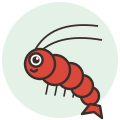
Not furry either, still lovely.
Cherry Shrimp
Neocaridina davidi
Also called Red cherry shrimp, Neocaridina shrimp, Fire red shrimp
From East Asia: Taiwan, eastern China, the Korean Peninsula and Vietnam. Today nearly all pet cherry shrimp come from aquarium-bred lines.1
At a glance the quick version
Wikipedia gives about 3-4 cm for adults; Aquarium Co-Op gives females up to 4 cm and males 2.5-3 cm.
Cooler water tends to mean a longer life, per Aquarium Co-Op.
Looks how to spot one
Exoskeleton (crustacean)
A small, slender freshwater shrimp with a segmented, semi-translucent shell that is shed as it grows. Wild shrimp are a mottled brown, while bred lines show strong, even colour. Females are usually larger and more deeply coloured than males.12
Personality what they are like
Gentle and rather shy. Cherry shrimp spend most of the day picking over plants, rocks and glass for food, and they like to tuck themselves away for a while after shedding their shell.12
Daily activity how busy a day looks
Busy grazers that forage almost constantly. Plenty of plants, moss and surfaces with biofilm keep them occupied and show off their natural behaviour.12
Grooming and care the hands-on bits
No handling needed. Keep water stable and well filtered, add mineral-rich or shrimp foods so shells form well, and leave shed skins in the tank as the shrimp often eat them.12
Home where they are happiest
A planted freshwater aquarium; a nano tank works, and about 10 US gallons (around 38 L) or more suits a breeding colony. Aquarium Co-Op suggests 16-28 C (best around 22-24 C), pH 6.5-8.5, GH at least 6 and KH at least 2. Hiding spots and moss help young shrimp.2
Food basics what goes in the bowl
Omnivorous grazers of algae, biofilm and detritus. In aquaria they also take shrimp pellets, gel foods, powdered foods for babies and blanched vegetables such as courgette.12
Company who they like around
Best kept as a group; Aquarium Co-Op suggests starting with at least ten so both sexes are present. They get along with other small, calm tankmates.2
The story where it all began
The species was first described by the French zoologist Bouvier in 1904 and has been moved between genera and renamed several times since. Hobbyists bred the wild brown form into bright colour lines, and the popular red line gave the animal its everyday name of cherry shrimp.1
Fun facts for the dinner table
- 1
Babies hatch as tiny copies of their parents, with no free-swimming larval stage, at roughly 1-2 mm long.1
- 2
A female carries around 20-30 eggs tucked under her tail for a few weeks; keepers call her 'berried'.2
- 3
Their colours come from several kinds of pigment cells, and part of the red and orange tone comes from carotenoids in the food they eat.1
- 4
Kept by aquarists all over the world, the total number of cherry shrimp is thought to run into the billions, most of them in home tanks.1
- 5
Red cherry shrimp are sold in grades by colour intensity, from 'cherry' and 'sakura' up to 'fire red' and 'Bloody Mary'.2
Recognised by the official bits
- Taxonomy (via Wikipedia)
- Neocaridina davidi (Bouvier, 1904), family Atyidae. Older names seen in the hobby include Neocaridina heteropoda and Neocaridina denticulata sinensis.1
The care rhythm Furry Diary remembers it for you
A typical home-care rhythm for a Cherry Shrimp. It is our own starting plan, not a vet's advice, and you can change every line in the app.
- FeedingSmall amountsevery day
- Temperature checkevery day
- Water changeSmall, gentle water changesevery week
- Water testevery week
- Filter rinseRinse in old tank water, never tap waterevery month
You might also like
 Amano Shrimp
 Crystal Red Shrimp
 Ghost Shrimp
 Blue Velvet Shrimp
Like what we are building? Buy us a coffee.
The breed atlas is free for everyone, with a source on every fact, and it will never show ads. If it helped you, a small tip keeps the research going. Any amount is lovely, and no is a perfectly fine answer too.
Where this comes from
Every breed page shows where each fact comes from. If we got something wrong, sorry, we are pet people, not a science magazine. Tell us at support@furrydiary.app and we will fix it.
- Neocaridina davidi - Wikipedia en.wikipedia.orgused for origin, taxonomy, size, lifespan, colours, diet, behaviour, breeding, history, fun facts
- Cherry Shrimp Care Guide - Aquarium Co-Op aquariumcoop.comused for water parameters, tank size, group size, diet, size by sex, colour grades, breeding
Checked 2026-09-30. Text is written in our own words from these sources.