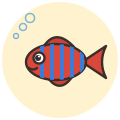
Not furry, but we like them anyway.
Red Zebra Cichlid
Maylandia estherae (Konings, 1995)
Also called Red Zebra, Red Zebra Mbuna, Esther Grant's Zebra, Pseudotropheus estherae, Metriaclima estherae
From Endemic to Lake Malawi, East Africa: rocky shores and reefs of the eastern (Mozambique) coast, from around Metangula and Minos Reef northwards.123
At a glance the quick version
Looks how to spot one
Torpedo-shaped rock-dwelling mbuna
A sturdy, elongated cichlid with a long dorsal fin. Colour depends on sex and form: wild males are usually pale blue while females are orange-red or brown, and males carry yellow egg spots on the anal fin.123
Personality what they are like
Lively and territorial, though calmer than many mbuna. Males claim a patch of rock and chase rivals, so it suits a group of similar-sized, robust Malawi cichlids rather than gentle community fish.32
Daily activity how busy a day looks
Very active; it grazes over rocks all day and needs plenty of open swimming room plus rockwork to patrol.13
Grooming and care the hands-on bits
Keep hard, alkaline water with strong filtration and regular water changes. Feed modest portions, since it is a keen eater, and keep different colour forms apart so lines stay true.3
Home where they are happiest
Aquarium with a base of at least about 120 x 38 cm (around 137 litres or more), lots of stacked rocks and caves, temperature 22-28 C, pH 7.5-8.8, hardness about 10-25 dGH.321
Food basics what goes in the bowl
Mainly a grazer of algae. Offer a plant-heavy diet such as spirulina flakes, blanched spinach and nori, with occasional small frozen foods as treats.123
Company who they like around
Best kept as one male with several females in a well-stocked mbuna tank; a fairly crowded tank spreads out the chasing.123
The story where it all began
Long treated in the hobby as a colour form of the zebra mbuna, it was described as its own species by Ad Konings in 1995. The name honours Esther Grant, wife of the pioneering Malawi cichlid exporter Stuart Grant, and early breeders developed the orange-red males now common in shops.23
Fun facts for the dinner table
- 1
It is known for moving pebbles and small decor around the tank with its mouth, effectively redecorating its own home.2
- 2
If no male is present, a female may take on male colouring and behaviour.3
- 3
The orange-red males seen in most shops come from selective breeding; wild males are usually blue.2
- 4
Females carry eggs and fry in their mouths for about three weeks before releasing them.2
Recognised by the official bits
- IUCN Red List
- Least Concern (assessed 20 June 2018)1
- Taxonomy
- Described by Konings in 1995; placed in Maylandia, though Pseudotropheus and Metriaclima are also used in the hobby2
The care rhythm Furry Diary remembers it for you
A typical home-care rhythm for a Red Zebra Cichlid. It is our own starting plan, not a vet's advice, and you can change every line in the app.
- FeedingSmall amounts once or twice a dayevery day
- Temperature checkevery day
- Water changeAbout 25% of the waterevery week
- Water testevery week
- Glass cleanevery week
- Filter rinseRinse in old tank water, never tap waterevery month
You might also like
 Cobalt Blue Zebra Cichlid
 Kenyi Cichlid
 Bumblebee Cichlid
Like what we are building? Buy us a coffee.
The breed atlas is free for everyone, with a source on every fact, and it will never show ads. If it helped you, a small tip keeps the research going. Any amount is lovely, and no is a perfectly fine answer too.
Where this comes from
Every breed page shows where each fact comes from. If we got something wrong, sorry, we are pet people, not a science magazine. Tell us at support@furrydiary.app and we will fix it.
- FishBase: Maylandia estherae fishbase.seused for taxonomy, size, distribution, IUCN, biology
- Wikipedia: Maylandia estherae en.wikipedia.orgused for names, morphs, care, history, fun facts
- Seriously Fish: Pseudotropheus estherae seriouslyfish.comused for care, water, diet, behaviour, breeding
Checked 2026-09-30. Text is written in our own words from these sources.