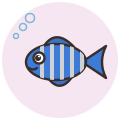
At a glance the quick version
Looks how to spot one
Elongated scaled fish
A slim, colourful sleeper goby. Males are larger and grow a raised hump behind the head; females are smaller and more streamlined.13
Personality what they are like
Peaceful toward other species and a little territorial with its own kind, mostly mild posturing between males.13
Daily activity how busy a day looks
Hovers in loose groups just above the bottom and appreciates places to retreat.23
Grooming and care the hands-on bits
Temperature 22-26 C, pH about 6.5-7.5, soft to medium water (around 5-10 dGH).12
Home where they are happiest
At least a 45 x 30 cm footprint (about 41 litres) for a couple of pairs. Dim light, plants and plenty of caves or pipes for hiding and breeding.13
Food basics what goes in the bowl
Eats insects, larvae and small crustaceans. Offer small live and frozen foods like brine shrimp, daphnia and bloodworm; it also takes dried food.13
Company who they like around
Can be kept in small groups or pairs; good company for calm rainbowfish, tetras, rasboras and Corydoras.1
The story where it all began
Nichols described the species in 1955 and created the genus Tateurndina for it. It remains the only member of its genus.23
Fun facts for the dinner table
Recognised by the official bits
- IUCN Red List (via FishBase)
- Vulnerable (assessed 2020).2
The care rhythm Furry Diary remembers it for you
A typical home-care rhythm for a Peacock Gudgeon. It is our own starting plan, not a vet's advice, and you can change every line in the app.
- FeedingSmall amounts once or twice a dayevery day
- Temperature checkevery day
- Salinity checkevery week
- Top-upTop up evaporation with fresh RO water, not salt waterevery day
- Water testevery week
- Water changeAbout 10 to 20% of the waterevery 2 weeks
- Glass cleanevery week
You might also like
 Bumblebee Goby
 Scarlet Badis
Like what we are building? Buy us a coffee.
The breed atlas is free for everyone, with a source on every fact, and it will never show ads. If it helped you, a small tip keeps the research going. Any amount is lovely, and no is a perfectly fine answer too.
Where this comes from
Every breed page shows where each fact comes from. If we got something wrong, sorry, we are pet people, not a science magazine. Tell us at support@furrydiary.app and we will fix it.
- Seriously Fish: Tateurndina ocellicauda seriouslyfish.comused for size, care, behaviour, diet
- FishBase: Tateurndina ocellicauda fishbase.seused for size, range, water parameters, IUCN, breeding
- Wikipedia: Peacock gudgeon en.wikipedia.orgused for colours, size, breeding, history, fun facts
Checked 2026-09-30. Text is written in our own words from these sources.