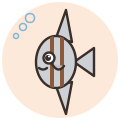
Not furry, but we like them anyway.
Altum Angelfish
Pterophyllum altum Pellegrin, 1903
Also called Altum angel, Deep angelfish, Orinoco angelfish
From South America: the Orinoco basin (upper tributaries such as the Inirida and Atabapo) and the upper Rio Negro in southern Venezuela, south-eastern Colombia and far northern Brazil.12
At a glance the quick version
Looks how to spot one
Very tall, side-flattened cichlid with long triangular fins
The tallest angelfish, with sail-like dorsal and anal fins that can stretch the fish to around 20 cm or more from fin tip to fin tip. A sharp notch above the nostrils sets it apart from the common angelfish.12
Personality what they are like
A calm, rather shy cichlid that is easily stressed by rough tankmates; it will however eat very small fish that fit in its mouth.32
Daily activity how busy a day looks
A slow, gliding swimmer that prefers gentle water movement.3
Grooming and care the hands-on bits
Suited to intermediate or advanced keepers who can hold soft, acidic, very clean water. Keep flow low and the tank quiet; tank-bred fish adapt to frozen and dried food more readily than wild ones.23
Home where they are happiest
A tall, roomy aquarium with plenty of height, dense and floating plants, roots and a soft bottom. Blackwater conditions: about 27-32 C, pH 4.8-6.2, hardness 0-5 dH.132
Food basics what goes in the bowl
Prefers live and frozen foods; tank-raised fish usually learn to take good frozen and flake foods too.3
Company who they like around
Can be kept in groups with peaceful, larger fish; discus share its water needs and make classic companions.3
The story where it all began
Pellegrin described the altum in 1903, and it is the largest of the angelfish. Wild fish reach shops mostly from late summer to early winter, when river levels allow collection.12
Fun facts for the dinner table
- 1
It can reach up to about 38 cm in height from dorsal tip to anal tip, according to Wikipedia.2
- 2
True Orinoco altums are identified by a notch above the nostrils.2
- 3
In the wild it often spawns on submerged roots and branches rather than plant leaves.2
- 4
The genus name refers to its tall, wide, triangular dorsal fin.1
Recognised by the official bits
- IUCN Red List
- Least Concern (assessed 28 October 2020)1
- Taxonomy
- Described by Pellegrin in 19031
- Family
- Cichlidae (cichlids)1
The care rhythm Furry Diary remembers it for you
A typical home-care rhythm for a Altum Angelfish. It is our own starting plan, not a vet's advice, and you can change every line in the app.
- FeedingSmall amounts once or twice a dayevery day
- Temperature checkevery day
- Water changeAbout 25% of the waterevery week
- Water testevery week
- Glass cleanevery week
- Filter rinseRinse in old tank water, never tap waterevery month
You might also like
 Discus
 Freshwater Angelfish
Like what we are building? Buy us a coffee.
The breed atlas is free for everyone, with a source on every fact, and it will never show ads. If it helped you, a small tip keeps the research going. Any amount is lovely, and no is a perfectly fine answer too.
Where this comes from
Every breed page shows where each fact comes from. If we got something wrong, sorry, we are pet people, not a science magazine. Tell us at support@furrydiary.app and we will fix it.
- FishBase: Pterophyllum altum fishbase.seused for distribution, size, water parameters, IUCN, etymology
- Wikipedia: Pterophyllum altum en.wikipedia.orgused for other names, appearance, height, identification, care, history, fun facts
- Seriously Fish: Pterophyllum altum seriouslyfish.comused for size, tank setup, water parameters, diet, behaviour, sexing
Checked 2026-09-30. Text is written in our own words from these sources.