At a glance the quick version
GCCF gives 8-12 lb (about 3.6-5.4 kg) without a split by sex.
Coat and looks how to spot one
medium-length, soft, fine double coat with ticking
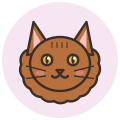
A medium, well-muscled cat with a gently rounded wedge head, big flared ears and expressive almond eyes from green to copper. The fine, soft coat is medium length, a little shorter over the shoulders, with a full ruff and a bushy fox-like tail. Each hair is banded with several shades, giving a warm, shimmering colour.123
Personality what they are like
Busy, bright and fearless, a Somali wants to open every cupboard and see what is going on. It shows love with head bumps and kneading, follows its people from room to room, and tunes in to their mood.12
Daily activity how busy a day looks
High. Can entertain itself for hours but loves interactive play with people or other pets.1
Grooming and care the hands-on bits
Moderate. The coat resists tangles, but a weekly comb removes dead hair and keeps the ruff and tail tidy. Baths are rarely needed outside showing.12
Company who they like around
Very people-focused and enjoys company, whether human or another playful pet.12
The story where it all began
Long-haired kittens turned up now and then in Abyssinian litters, and in the 1960s American breeder Evelyn Mague began working with them and gave them the name Somali, after the country next to Abyssinia. Breeders in the US and Canada developed the line, and CFA granted championship status in 1979, with Europe following in 1982.123
Fun facts for the dinner table
- 1
Its bushy tail and ticked coat earned it the nickname 'fox cat'.3
- 2
Some Somalis are so fascinated by water that they learn to turn on taps to watch it drip.1
- 3
The name comes from Somalia, the neighbour of Abyssinia (Ethiopia), echoing the Abyssinian's name.2
- 4
Each hair can carry many bands of colour, which gives the coat its glow.3
Recognised by the official bits
- CFA
- Registration 1976; championship status 19791
- GCCF
- Championship status 1998 (in the UK since 1980)2
- FIFe
- Accepted in Europe in 1982; shares a standard with the Abyssinian3
- TICA
- Recognised; broad international acceptance by 19913
Popularity 25th of 54 breeds in FIFe kitten registrations (230 kittens, 0.2% of the total)3
The care rhythm Furry Diary remembers it for you
A typical home-care rhythm for a Somali. It is our own starting plan, not a vet's advice, and you can change every line in the app.
- Brushingevery 2 days
- Deshedding springBrush more while sheddingevery day
- Nail trimevery 3 weeks
- Teeth brushingDaily brushing is idealevery 2 days
- Litter scoopevery day
- Litter changeevery week
- PlayDaily playevery day
- Flea, tick and worm protectionSchedule as your vet recommendsas your vet recommends
- Vet check-upSenior years usually start around age 11every year
You might also like
 Abyssinian
 Singapura
 Balinese
 Turkish Angora
Like what we are building? Buy us a coffee.
The breed atlas is free for everyone, with a source on every fact, and it will never show ads. If it helped you, a small tip keeps the research going. Any amount is lovely, and no is a perfectly fine answer too.
Where this comes from
Every breed page shows where each fact comes from. If we got something wrong, sorry, we are pet people, not a science magazine. Tell us at support@furrydiary.app and we will fix it.
- CFA: Somali cfa.orgused for history, recognition, body, coat, colours, temperament, grooming, activity, fun facts
- GCCF: Somali gccfcats.orgused for recognition, weight, lifespan, colours, temperament, grooming
- Wikipedia: Somali cat en.wikipedia.orgused for other names, history, recognition, colours, popularity
Checked 2026-09-30. Text is written in our own words from these sources.