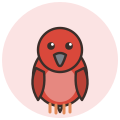
Red-bellied Parrot
Poicephalus rufiventris
Also called Orange-bellied parrot, African orange-bellied parrot, Red-breasted parrot, Abyssinian parrot
From North-east Africa: central and eastern Ethiopia and Somalia south through Kenya to northern Tanzania. It lives in semi-arid bush, acacia-commiphora woodland and riverside forest at about 800-2,000 m.1
At a glance the quick version
Looks how to spot one
Feathered; compact parrot with a large head and short tail
Mostly grey-brown above with green on the lower body, green thighs and a greenish rump. Eyes are orange-red and the bill is dark grey. It is one of the few parrots where you can tell the sexes apart easily: males have a vivid orange lower chest and belly, while females are greenish there, and the difference shows even in chicks.12
Personality what they are like
Like its Poicephalus relatives it is playful and outgoing once it trusts you, enjoys head scratches and is not overly loud. It is regarded as the best talker in its group.3
Daily activity how busy a day looks
Needs daily out-of-cage time plus ropes, ladders and chew toys to climb and play with.3
Grooming and care the hands-on bits
Provide bathing water, fresh chew toys and varied perches, and keep the cage clean.31
Home where they are happiest
A roomy cage or aviary at least 2 m long, with horizontal bars that encourage climbing.13
Food basics what goes in the bowl
Wild birds eat figs, acacia seeds and various fruits, plus flowers and nectar. Pets do well on pellets plus cooked beans, sprouted seeds, fresh fruit and vegetables.123
Company who they like around
Lives in pairs or small family groups in the wild; as a pet it needs regular, gentle interaction with its people.13
The story where it all began
Eduard Rüppell described the red-bellied parrot in 1842 from north-east Africa. It remains less common in aviculture than the Senegal or Meyer's parrot.21
Fun facts for the dinner table
- 1
Unusually for a parrot, you can sex red-bellied parrots by sight, and the difference is visible even in chicks in the nest.2
- 2
It often nests in hollows of baobab trees, sometimes in loose colonies.1
- 3
It is regarded as the best talker in the Poicephalus family.3
- 4
Wild birds are often seen near water in pairs or family groups of three or four.1
Recognised by the official bits
- Taxonomy
- Described by Eduard Rüppell in 1842; two subspecies, rufiventris and pallidus.2
- IUCN Red List
- Least Concern; wild population described as stable.1
- Aviculture
- Uncommon in captivity according to the World Parrot Trust.1
The care rhythm Furry Diary remembers it for you
A typical home-care rhythm for a Red-bellied Parrot. It is our own starting plan, not a vet's advice, and you can change every line in the app.
- Fresh food and waterevery day
- Cage linerevery 2 days
- Full cleanevery week
- Bath offerevery 3 days
- Nails checkevery month
- Beak checkevery month
- Toy rotationevery week
- Out-of-cage timeAbout 2 hours a dayevery day
- Vet check-upevery year
You might also like
 Senegal Parrot
 Meyer's Parrot
Like what we are building? Buy us a coffee.
The breed atlas is free for everyone, with a source on every fact, and it will never show ads. If it helped you, a small tip keeps the research going. Any amount is lovely, and no is a perfectly fine answer too.
Where this comes from
Every breed page shows where each fact comes from. If we got something wrong, sorry, we are pet people, not a science magazine. Tell us at support@furrydiary.app and we will fix it.
- World Parrot Trust - Red-bellied Parrot parrots.orgused for range, size, weight, description, diet, lifespan, status, housing
- Wikipedia - Red-bellied parrot en.wikipedia.orgused for history, description, sexual dimorphism, diet
- Lafeber - Poicephalus lafeber.comused for temperament, talking, cage, diet, lifespan
Checked 2026-09-30. Text is written in our own words from these sources.