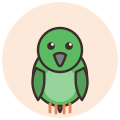
Plum-headed Parakeet
Psittacula cyanocephala
Also called Plumhead, Plum-head parakeet
From The Indian subcontinent: the lower Himalayan foothills from north-eastern Pakistan through Nepal and Bhutan, most of India, West Bengal and Sri Lanka.1
At a glance the quick version
Looks how to spot one
Feathered; slim parakeet with a long, white-tipped tail
A slender, yellowish-green parakeet with a long graduated tail tipped in blue and white. Adult males have a deep plum-red head that turns violet-blue towards the back of the crown, a thin black chin strap and collar, and a small dark red shoulder patch. Hens have a soft blue-grey head and a yellow collar instead of black.12
Personality what they are like
A sociable, chatty bird that lives in flocks and often nests in colonies. In captivity it can pick up beeps, short whistled tunes and even words. It flies fast with quick twists and turns.21
Daily activity how busy a day looks
Needs room to fly. The World Parrot Trust suggests a walk-in aviary at least 3 m long, with swings, ladders, ropes, foot toys and chewable wood for play.1
Grooming and care the hands-on bits
Provide bathing water and a steady supply of bird-safe chewables such as fir, pine, willow or elder wood, pine cones and vegetable-tanned leather toys.1
Home where they are happiest
A walk-in aviary with a minimum length of about 3 m.1
Food basics what goes in the bowl
A small-seed mix (canary seed, millet, oats, buckwheat, safflower) with soaked or sprouted sunflower, spray millet, green leaves and plenty of fruit, especially apple. In the wild it eats more fruit than most Asian parakeets, plus flowers, buds, nectar and seeds.1
Company who they like around
A flock species that often breeds in loose colonies and forages alongside other parakeets, so it does best with company of its own kind.12
The story where it all began
Brisson described this parakeet in 1760 and Linnaeus gave it a Latin name in 1766; the species name means 'dark-blue headed'. The Greek physician Ctesias, writing in the 5th century BC, probably described this very bird as one that could speak both an Indian language and Greek.2
Fun facts for the dinner table
- 1
Its flight call is often written as 'toowinck-toowinck'.1
- 2
A Greek writer in the 5th century BC probably described this bird as able to talk in two languages.2
- 3
The tail can be up to about 22 cm long, well over half the bird's total length.2
- 4
It eats more fruit than most of its Asian parakeet relatives.1
Recognised by the official bits
- IUCN Red List
- Least Concern.1
- CITES
- Appendix II.1
- Taxonomy
- Described by Brisson in 1760 and named by Linnaeus in 1766. Once treated as the same species as the blossom-headed parakeet, now a full species with no subspecies.2
The care rhythm Furry Diary remembers it for you
A typical home-care rhythm for a Plum-headed Parakeet. It is our own starting plan, not a vet's advice, and you can change every line in the app.
- Fresh food and waterevery day
- Cage linerevery 2 days
- Full cleanevery week
- Bath offerevery 3 days
- Nails checkevery month
- Beak checkevery month
- Toy rotationevery week
- Out-of-cage timeAbout 2 hours a dayevery day
- Vet check-upevery year
You might also like
 Alexandrine Parakeet
 Indian Ringneck Parakeet
Like what we are building? Buy us a coffee.
The breed atlas is free for everyone, with a source on every fact, and it will never show ads. If it helped you, a small tip keeps the research going. Any amount is lovely, and no is a perfectly fine answer too.
Where this comes from
Every breed page shows where each fact comes from. If we got something wrong, sorry, we are pet people, not a science magazine. Tell us at support@furrydiary.app and we will fix it.
- Plum-headed Parakeet - World Parrot Trust Parrot Encyclopedia parrots.orgused for size, weight, lifespan, range, status, captive care, diet, fun facts
- Plum-headed parakeet - Wikipedia en.wikipedia.orgused for history, taxonomy, length, talking ability, behaviour
Checked 2026-09-30. Text is written in our own words from these sources.